Monday, December 14, 2009

Mallord: One Step Closer


Many thanks to the remarkably helpful staff at Tulane Special Collections! They provided more clues that will allow me to once again pick up the search for Mallord.

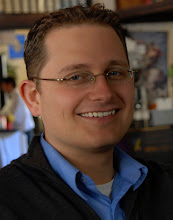
Susanna Powers reminded me that Mallord published two books, a fact that I had filed away during my last search. Today my copy of Moving Against Quiet arrived in the mail. It was published eleven months after Love Alone Finds Cold. On the back cover there is a picture of Mallord (sans beard), which graces this post.

The content of the book is similar to Love Alone Finds Cold, a blend of psychedelic writings and Romantic posturing with echoes of the beat generation. It is worlds away from Toole's literary forte of acerbic wit. But somehow these two writers connected, if only for a brief moment, just before Toole's final journey.

Monday, November 16, 2009

Searching for a lost poet


In the course of writing this biography I have found several trails leading to dead ends. But there is no dead end more intriguing to me than the connection between John Kennedy Toole and a poet who went by the name of Mallord.

His full name is Richard Mallord Silverman. He published a book of poems in New Orleans in 1969 titled Love Alone Finds Cold (Silver Bicycle Press). He gave Toole a copy and inscribed it January 20th, 1969--the day Toole fought with his mother and left New Orleans, never to return.

For years I have sought Mallord. In addition to the book of poems, I found two letters that he wrote to philosopher Bertrand Russell. From those letters it appears Mallord lived in Crestwood, NY in 1967 with a Laurie Gamola—or at least he was receiving mail through her. But here is where the trail ends: a book of poems, a New York address from the mid-sixties, his near obsession with the Romanitic poet Percy Bysshe Shelley as indicated in his letters, and a hitherto mysterious connection to American novelist John Kennedy Toole.

Perhaps Toole and Mallord were mere acquaintances, fellow students at Tulane, or perhaps they just shared a drink at a bar. Regardless, Mallord might offer insight into a time period in Toole’s life when he was shutting off from the world, succumbing to his consuming paranoia.

So I open up this question to you, dear readers, in hopes to find a way around this dead end. Does anyone have any information about the elusive poet named Mallord?

Friday, October 23, 2009

Elemore Morgan Jr.: LA Artist and Toole's Friend

Two years ago when I approached Joel Fletcher about this project, he recommended I contact Louisiana artist Elemore Morgan, Jr. who had lived in the apartment above Toole in Lafayette from 1959-1960. I delayed and I missed my opportunity to speak with him before he passed away.

But yesterday I enjoyed a lovely conversation with his wife. She is now going through many of her husband's papers and there is a good chance she will find more material that could help me bring readers into the moment of Toole's life in Lafayette in 1960. Toole formed many lasting friendships in that year. And in his friends he had an audience that enjoyed his short tales of New Orleans life.

Here is a short video about Morgan's work.

Friday, October 2, 2009

The Yellow Brick Road

After several revisions my agent has placed his seal of approval on the book proposal. How nice the title page looks with an agency logo at the bottom! He will begin pitching it to major publishing houses next week.

I now stand on the margins of the modern publishing industry, closer than I have ever been before. But from my limited vantage point, I have gained some insight into this most elusive world. And it has given me some perspective on Toole's struggle with publication.

I sympathize with his two years of revisions, as Confederacy was under consideration by Simon & Schuster. But how fortunate he was to send a manuscript directly to Simon & Schuster, have an editor read it, and then engage in an elaborate correspondence with the particularly brilliant editor, Robert Gottlieb.

Thelma Toole was wrong to blame Gottlieb for her son's mental collapse. She made him the scapegoat for her son's mental illness, which had elaborate underpinnings, including his homelife with his mother. Ultimately, Gottlieb mentored Toole--offering advice and criticism. And he did so with compassion, as his letters testify.

For better or worse the major publishing houses of today are much larger than in Toole's day. For a new writer to step into this world it takes precision, a balance between the roles of artist and salesperson, and the crucial services of an agent.

I have been fortunate to have such a patient and dedicated agent. Thus far my first few steps have been challenging, but enjoyable. Of course, I recognize the road ahead will have significant trials. But like any aspiring writer, I have some degree of faith that it will end in triumph.

Wednesday, September 16, 2009

Rest in Peace--Dr. Patricia Rickels

Dr. Patricia Rickels, one of Toole's dearest friends, passed away on Tuesday. I only had three conversations with Dr. Pat, as she was lovingly called. But each one of our conversations lasted several hours. Each time I hung up the phone and as I drove away from her house in early April, I felt I had been in the presence of a remarkable person, someone in love with life and literature, despite her many hardships. From the short time I knew her, I found her to be a teacher of the purest kind. Her legacy lives on in the countless people she inspired. Thank you Dr. Pat.

Sunday, August 30, 2009

A call to anyone at Fort Buchanan 1961-1963

Piggybacking on the previous post, it occurs to me that I might have readers in Puerto Rico now, some of whom may be able to help shape this book. Since I have been writing about Toole in Puerto Rico I have spoken with many of the instructors that served in Company A. But it has always bothered me that I have yet to speak to any of the trainees (or Puerto Rican recruits). My attempts to contact anyone from the Puerto Rican side of this story have not been successful. I would love to speak with any of the Puerto Rican trainees who came through Company A, B or C in the early 60s. So, dear readers, if anyone can help me make this connection, you would have my eternal gratitude. Gracias!

Friday, August 28, 2009

Review in Puerto Rico

I would have never expected to have gained my first bit of media recognition as a Toole biographer in Puerto Rico, but it seems apropos considering I have been continuously thinking about the Puerto Rico, and more specifically Fort Buchanan, of 1962 and 1963 over the past few months.

Sofia Cardona, a professor at University of Puerto Rico, contacted me a few weeks ago to ask some questions about Toole. We exchanged a few emails and then she posted a link to her very interesting review of Confederacy. She approaches the novel from a Puerto Rican perspective, which I think is an approach that deserves more exploration.

Her review was published in Claridad, a primary source for news and arts in Puerto Rico. View it here: "Sobre el libro de aquel gringo"

For those of you who do not speak Spanish, Google translator will give you a rough translation--but enough to get an idea of the article.