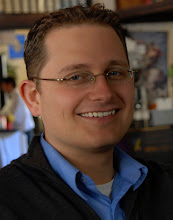
I spent this past weekend in New York. I visited the room in which Toole lived while he attended Columbia University. The trip offered me insight into his time in New York in the late 50s and early 60s. I saw the view he had from his dorm window and I strolled the tranquil Columbia campus, forgetting I was in Manhattan. And it became clear, after reviewing his transcripts how Toole began to veer from the often seeming inanity of graduate studies towards a more “authentic” literary life as fiction writer.
I also took a stroll around Hunter College and got some pictures of the exterior of the house he moved to on the East Side, the same place he began drafting the character that would become Ignatius Reilly. It was one of those moments where Toole’s letters came alive to me.
But perhaps the most intriguing event I experienced seemed beyond coincidence. However it will likely not make it into this biography. So I share it with you here…
After seeing the room in which he stayed at Columbia, my wife and I got a bite to eat at a Greek restaurant. Being the end of term it was almost empty and we overheard the mixed conversations of two parties. The two men behind us were smug religious scholars who discussed Saint Ignatius and how one of the scholars had found the "key" to the moral dilemma of the modern age. The couple behind them talking in a loud New Jersey accent discussed the marvel of caffeinated vitamin-enriched water: "I'm tellin ya I feel betta in da mornin wid just some nutrients and a pick-me-up. Cawfee got nut’n on dis watta stuff." I couldn’t help but smile. It was the kind of moment Toole would have relished.
Thursday, June 3, 2010

Tuesday, May 18, 2010
Screening a Success

It is not everyday I dine with an award winning filmmaker and a published author. And it is a rare occasion to be on a panel with both of them to discuss the life and works of John Kennedy Toole. But on May 8th Joe Sanford and Bobbie Westerfield flew up from New Orleans and joined Joel Fletcher and me for dinner. Compliments to Joel and John Copenhaver--chef and host extrordinaire, respectively. Afterward we all went to the screening of Sanford's documentary.
The first screening was sold out. It was wonderful to hear the audience respond to interviews with people that Joe, Joel and I have come to know well in our exploration of the Toole story. And it was much fun to field the many questions that surround Toole's life and work. Many thanks to Paul Lewis of the Athenaeum and Rappahanock Independent Film Festival for organizing the evening.
For those of you who could make it, thank you for coming. And for those who could not make it, I hope the film will be available in a theatre near you soon. I like Susanna Powers's suggestion of a screening at the Prytania....How fitting!
Image--Standing from left to right: Joe Sanford and Paul Lewis. At table from left to right: Bobbie Westerfield (Producer), Cory MacLauchlin and Joel Fletcher.
Monday, April 12, 2010
Film Screening in Fredericksburg VA

The film screening for Joe Sanford's John Kennedy Toole: The Omega Point will be held on May 8th at the Fredericksburg Athanaeum. Click here for more details. There will be two screenings: 7pm and 10pm. Joe Sanford, Joel Fletcher and I will be on a panel answering questions between the two screenings. Space is limited so tickets are a necessity. Hope to see you all there!
Tuesday, February 9, 2010
Bravo Mr. Sanford!
Today I had the pleasure of watching the documentary John Kennedy Toole: The Omega Point with my good friend and author Joel Fletcher. I am in the film so I may be inherently biased. But regardless of my contributions, it is a brilliant work of documentary craftsmanship. As a biographer, I can attest to its remarkable balance between compelling storytelling and historical accuracy. And the images are simply beautiful.
Of course, you don’t have to take my word for it. It recently won The Rising Star Award for Excellence in Film at the 2010 Canada International Film Festival.
The Athenaeum in Fredericksburg, VA will host a screening of the film on April 17, 2010. Following the screening there will be a panel with Joe Sanford (Filmmaker), Joel Fletcher (friend of JKT and author of Ken & Thelma) and me.
I look forward to the day you all will be able to select this film in your Netflix queue. Until then, you can keep an eye on the progress of the film at www.jktoole.com.
Of course, you don’t have to take my word for it. It recently won The Rising Star Award for Excellence in Film at the 2010 Canada International Film Festival.
The Athenaeum in Fredericksburg, VA will host a screening of the film on April 17, 2010. Following the screening there will be a panel with Joe Sanford (Filmmaker), Joel Fletcher (friend of JKT and author of Ken & Thelma) and me.
I look forward to the day you all will be able to select this film in your Netflix queue. Until then, you can keep an eye on the progress of the film at www.jktoole.com.
Sunday, January 24, 2010
The Importance of Boogie Woogie
Over the holidays I took some time to revise my book proposal. One of the editorial suggestions I received from one of the most respected editors in the publishing world was to add “more color”—especially for a New Orleans based book. While I don’t think my style is bone-dry, I must admit, scholars are known for their obsession with precision. Because so many liberties have already been taken with Toole’s life story, I initially dedicated myself to getting the story accurate and making it cohesive. But I know the importance of color. Even Piet Mondrian recognized the need for boogie woogie as he painted with remarkable precision.
So I decided to address some of the most colorful questions that readers would certainly ask when reading this biography. Questions about Toole’s sexuality and insights into his last few months on this earth form much of the intrigue surrounding his brief life. But the question for me was how to answer these questions. My treatment of such topics could not be reckless, simplified or overly grand.
Like most writers, when stuck, I turn to reading. And one of the books I picked up over the holidays was Ned Sublette’s The World that Made New Orleans. I was looking for a new text for my class on New Orleans Literature and Culture and I had grown tired of Herbert Asbury’s The French Quarter. Thus far, I have found that Sublette’s work is one of the first books on New Orleans that energetically synthesizes the city’s complex roots from a global perspective, without falling into that clichéd metaphor of New Orleans as a “cultural gumbo.” I have yet to finish the book, but so far Sublette has given me a worthy lesson in adding color to a historical narrative, without compromising its integrity.
And so I returned to my proposal with fresh eyes. And instead of paining over edits, I embraced the need to discard five pages here and add three paragraphs there. I thought of the dozens of studies Gericault did for The Raft of the Medusa or Picasso’s many studies leading up to Las Meninas, and I strived for a bigger picture.
The picture is not complete, but I think my colors are more vibrant. So to Mr. Sublette I say, thank you.
So I decided to address some of the most colorful questions that readers would certainly ask when reading this biography. Questions about Toole’s sexuality and insights into his last few months on this earth form much of the intrigue surrounding his brief life. But the question for me was how to answer these questions. My treatment of such topics could not be reckless, simplified or overly grand.
Like most writers, when stuck, I turn to reading. And one of the books I picked up over the holidays was Ned Sublette’s The World that Made New Orleans. I was looking for a new text for my class on New Orleans Literature and Culture and I had grown tired of Herbert Asbury’s The French Quarter. Thus far, I have found that Sublette’s work is one of the first books on New Orleans that energetically synthesizes the city’s complex roots from a global perspective, without falling into that clichéd metaphor of New Orleans as a “cultural gumbo.” I have yet to finish the book, but so far Sublette has given me a worthy lesson in adding color to a historical narrative, without compromising its integrity.
And so I returned to my proposal with fresh eyes. And instead of paining over edits, I embraced the need to discard five pages here and add three paragraphs there. I thought of the dozens of studies Gericault did for The Raft of the Medusa or Picasso’s many studies leading up to Las Meninas, and I strived for a bigger picture.
The picture is not complete, but I think my colors are more vibrant. So to Mr. Sublette I say, thank you.
Monday, December 14, 2009
Mallord: One Step Closer

Many thanks to the remarkably helpful staff at Tulane Special Collections! They provided more clues that will allow me to once again pick up the search for Mallord.
Susanna Powers reminded me that Mallord published two books, a fact that I had filed away during my last search. Today my copy of Moving Against Quiet arrived in the mail. It was published eleven months after Love Alone Finds Cold. On the back cover there is a picture of Mallord (sans beard), which graces this post.
The content of the book is similar to Love Alone Finds Cold, a blend of psychedelic writings and Romantic posturing with echoes of the beat generation. It is worlds away from Toole's literary forte of acerbic wit. But somehow these two writers connected, if only for a brief moment, just before Toole's final journey.
Monday, November 16, 2009
Searching for a lost poet

In the course of writing this biography I have found several trails leading to dead ends. But there is no dead end more intriguing to me than the connection between John Kennedy Toole and a poet who went by the name of Mallord.
His full name is Richard Mallord Silverman. He published a book of poems in New Orleans in 1969 titled Love Alone Finds Cold (Silver Bicycle Press). He gave Toole a copy and inscribed it January 20th, 1969--the day Toole fought with his mother and left New Orleans, never to return.
For years I have sought Mallord. In addition to the book of poems, I found two letters that he wrote to philosopher Bertrand Russell. From those letters it appears Mallord lived in Crestwood, NY in 1967 with a Laurie Gamola—or at least he was receiving mail through her. But here is where the trail ends: a book of poems, a New York address from the mid-sixties, his near obsession with the Romanitic poet Percy Bysshe Shelley as indicated in his letters, and a hitherto mysterious connection to American novelist John Kennedy Toole.
Perhaps Toole and Mallord were mere acquaintances, fellow students at Tulane, or perhaps they just shared a drink at a bar. Regardless, Mallord might offer insight into a time period in Toole’s life when he was shutting off from the world, succumbing to his consuming paranoia.
So I open up this question to you, dear readers, in hopes to find a way around this dead end. Does anyone have any information about the elusive poet named Mallord?
Subscribe to:
Posts (Atom)